






Supreme Court Intervenes: CBI to Probe Karur Stampede Under Judicial Oversight
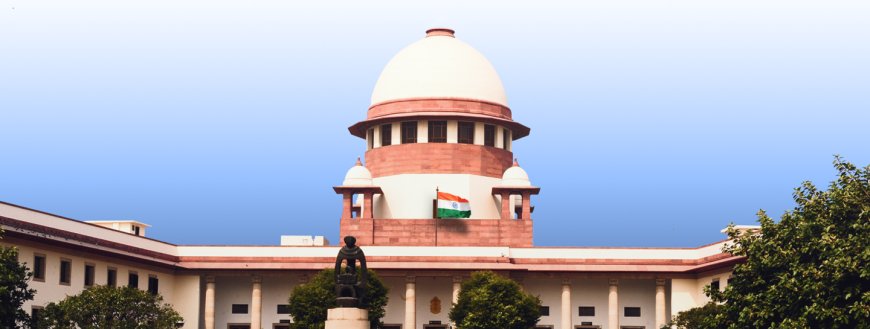
New Delhi, October 13, 2025 — In a decisive intervention that underscores the gravity of the Karur tragedy, the Supreme Court has transferred the investigation of the September 27 stampede to the Central Bureau of Investigation, placing it under the watchful eye of a retired apex court judge.
A Tragedy That Shook the Nation
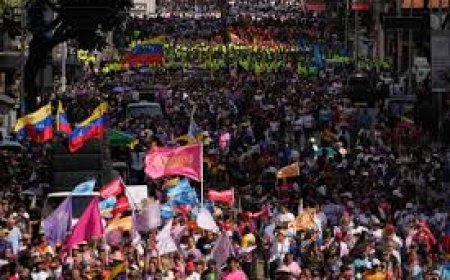
The stampede during actor-turned-politician Vijay's Tamilaga Vettri Kazhagam (TVK) rally in Karur district resulted in the loss of 41 lives, triggering nationwide shock and raising serious questions about crowd management and administrative oversight at political gatherings.
Recognizing the magnitude of the incident, the Supreme Court bench of Justice JK Maheshwari and Justice NV Anjaria observed that the tragedy has "shaken the national conscience" and warrants an investigation free from any perception of bias or local influence.
Three-Tier Oversight Mechanism
In an unprecedented move to ensure transparency, the Court has established a robust monitoring framework. Former Supreme Court Justice Ajay Rastogi will head a three-member Supervisory Committee tasked with overseeing every aspect of the CBI's investigation.
The committee's composition reflects careful consideration of neutrality concerns. Justice Rastogi has been empowered to select two senior Indian Police Service officers—holding ranks no lower than Inspector General—from the Tamil Nadu cadre. However, these officers must not be natives of the state, a condition designed to eliminate any potential local pressures or affiliations.
The CBI will operate under monthly reporting requirements, submitting detailed progress updates to the Supervisory Committee, which retains authority to issue directives and review collected evidence.
High Court's Approach Questioned
The Supreme Court's order contained pointed criticism of the Madras High Court's handling of the matter, highlighting procedural irregularities that raised eyebrows in legal circles.
The Chennai Bench had constituted a Special Investigation Team comprising Tamil Nadu Police officers—a decision the Supreme Court found particularly problematic given that the original petition merely sought the establishment of standard operating procedures for political rallies, not a criminal investigation.
Further complicating matters, the Chennai Bench entertained a case concerning an incident in Karur, which geographically falls under the jurisdiction of the Madurai Bench. The Supreme Court emphasized that such territorial overreach required explicit authorization from the Chief Justice, which was notably absent.
The apex court has now directed the High Court's Registrar General to explain how a petition seeking policy guidelines was registered as a criminal writ petition, and ordered the Chief Justice to reassign the original SOP petition to a different bench.
Disturbing Questions Emerge
During proceedings, the Supreme Court raised several troubling questions that demand answers:
Permission Paradox: Why was TVK granted permission to hold a rally at a venue where another political party, AIADMK, had been denied authorization on grounds that the passage was too narrow to safely accommodate large crowds?
Midnight Postmortems: How were postmortem examinations of 30 to 40 bodies completed in the dead of night, with cremations reportedly conducted at 4 a.m.? The unusual timing has sparked concerns about potential lapses in protocol and documentation.
These questions suggest that the investigation may need to examine not just the immediate circumstances of the stampede, but also the administrative decisions and processes that preceded it.
Political Dimensions
The case carries significant political overtones. Actor Vijay's TVK party, through its General Secretary Aadhav Arjuna, approached the Supreme Court challenging the High Court's October 3 order that formed the State Police-led SIT. The party objected to both the composition of the investigative team and adverse remarks made by the High Court against TVK and Vijay himself.
In an intriguing development, after the Supreme Court announced its order, senior advocates representing Tamil Nadu—Dr. AM Singhvi and P Wilson—informed the bench that petitioners in two cases seeking CBI investigation claimed their petitions were filed without their knowledge. The Court indicated it would examine this matter separately.
The Road Ahead
Tamil Nadu has been granted eight weeks to file its counter-affidavit. The Supreme Court clarified that its directions are based on prima facie observations and remain interim in nature pending final adjudication.
The investigation will need to unravel multiple layers: crowd management failures, adequacy of security arrangements, the permission-granting process, emergency response effectiveness, and whether administrative negligence contributed to the tragedy.
For the families of the 41 victims, the Supreme Court's intervention offers hope that the truth will emerge through an impartial investigation, uninfluenced by local political considerations or administrative pressures.
As the CBI begins its probe under judicial monitoring, this case may set important precedents for how mass gathering tragedies are investigated and how accountability is ensured when political events turn fatal. The nation watches as the wheels of justice turn, seeking answers that might prevent such heartbreaking losses in the future.
What's Your Reaction?
 Like
0
Like
0
 Dislike
0
Dislike
0
 Love
0
Love
0
 Funny
0
Funny
0
 Angry
0
Angry
0
 Sad
0
Sad
0
 Wow
0
Wow
0