














The End of an Era: Khaleda Zia's Legacy in Bangladesh

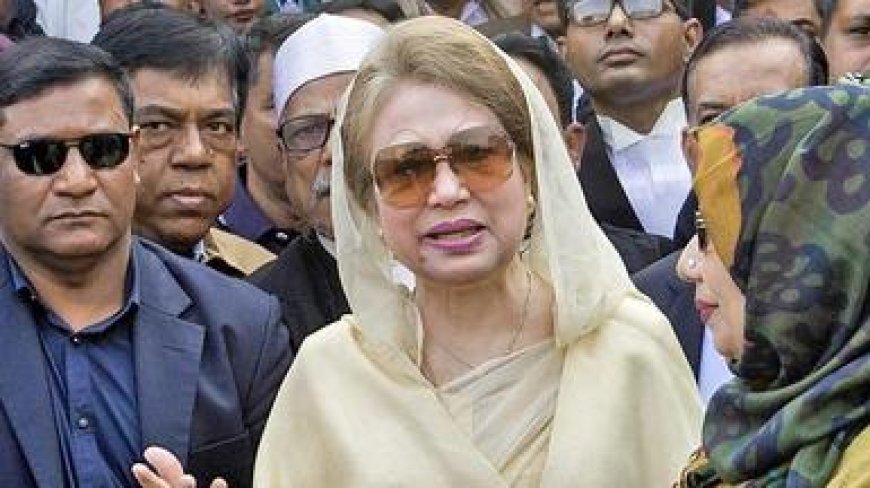
Bangladesh's First Female Prime Minister Passes at 80, Closing a Turbulent Chapter in South Asian Politics
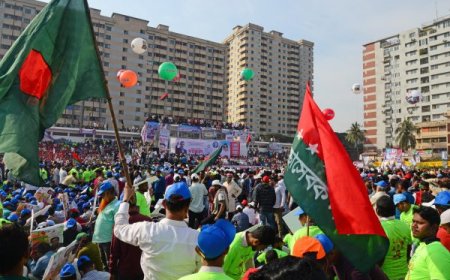
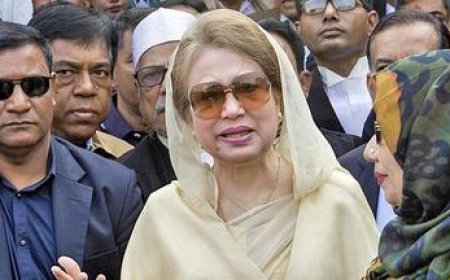
On December 30, 2025, Bangladesh mourned the loss of Khaleda Zia, the nation's pioneering female political leader who passed away at the age of 80 after a prolonged battle with multiple health complications. Her death at Evercare Hospital in Dhaka marks the conclusion of one of South Asia's most remarkable and contentious political careers.
From Tragedy to Triumph
Born on August 15, 1946, in Dinajpur, Khaleda married army officer Ziaur Rahman at age 15. Her life as a military spouse seemed destined for privacy until everything changed in 1981 when President Ziaur Rahman was assassinated during an attempted military coup. At just 35 years old, the widowed Khaleda found herself thrust into Bangladeshi politics, inheriting leadership of the Bangladesh Nationalist Party when few believed a political novice—let alone a woman—could navigate such treacherous waters.
Breaking Barriers
Khaleda defied expectations, rallying opposition against military dictator Hussain Muhammad Ershad and temporarily joining forces with Sheikh Hasina to restore democratic governance in 1990. In 1991, Bangladesh held its first widely accepted free election, and Khaleda made history by becoming the country's first female prime minister. Her first term saw significant reforms including transformation to a parliamentary system, introduction of compulsory primary education, and liberalization of foreign investment.
The Rivalry That Defined a Generation
Khaleda's political career was defined by her bitter, three-decade rivalry with Sheikh Hasina. These two women—known as the 'battling begums'—completely dominated Bangladeshi politics. After losing the 1996 election to Hasina, Khaleda mounted a stunning comeback, winning a landslide victory in 2001. The rivalry escalated to dangerous levels in 2007, bringing military-backed emergency rule. When normalcy returned, Hasina emerged dominant, ruling Bangladesh from 2008 until her dramatic overthrow in 2024.
Imprisonment and Vindication
In 2018, Khaleda was convicted of embezzling approximately $250,000 in foreign donations intended for an orphanage trust and sentenced to 17 years in prison. She maintained the charges were politically motivated. Despite deteriorating health, her requests for medical treatment abroad were repeatedly rejected. By 2020, she was released to house arrest on humanitarian grounds.
Political fortunes shifted dramatically in August 2024 when a student-led uprising toppled Hasina's government. Khaleda was freed from house arrest and granted permission to travel abroad for medical treatment. In January 2025, the Supreme Court acquitted her in the final corruption case—a bittersweet vindication for someone whose health had already deteriorated beyond recovery.
Following Hasina's fall, Khaleda demonstrated remarkable grace, maintaining dignified silence and refraining from vindictiveness toward the woman who had imprisoned her. This restraint spoke volumes about her character and political maturity.
The Final Days
Khaleda's health had been in precipitous decline for years. She suffered from advanced cirrhosis of the liver, arthritis, diabetes, and chronic heart and chest problems. She was last seen publicly on November 21 at a military function in Dhaka, appearing pale and tired in a wheelchair. At 6:00 AM local time on December 30, 2025, Khaleda Zia passed away.
A Complex Legacy
Khaleda is survived by her eldest son, Tarique Rahman, who returned to Bangladesh on December 25, 2025, after 17 years in exile. Her younger son, Arafat, died in 2015.
Khaleda Zia's legacy remains deeply contested. Supporters celebrate her as a champion of democracy who broke gender barriers and stood firm against authoritarianism despite enormous personal cost. Critics point to controversial alliances, election boycotts, and accusations of corruption.
What remains indisputable is her historical significance. Khaleda evolved from a shy military spouse into one of South Asia's most influential leaders. She helped end military dictatorship, pioneered female political leadership in a conservative society, and demonstrated that women could compete at the highest levels of power in the region.
As Bangladesh processes her death, the nation finds itself at a critical juncture. With both 'battling begums' now removed from active politics, Bangladesh has an opportunity to move beyond the personalized politics that dominated for so long. Khaleda Zia leaves behind a Bangladesh she helped shape—her journey from bereaved widow to pioneering prime minister to vindicated elder stateswoman tells the story of Bangladesh itself: turbulent, resilient, and still searching for stable democratic governance.
What's Your Reaction?
 Like
0
Like
0
 Dislike
0
Dislike
0
 Love
0
Love
0
 Funny
0
Funny
0
 Angry
0
Angry
0
 Sad
0
Sad
0
 Wow
0
Wow
0