










Bangladesh at a Turning Point: Tarique Rahman's Historic Ascent to the Prime Minister's Office
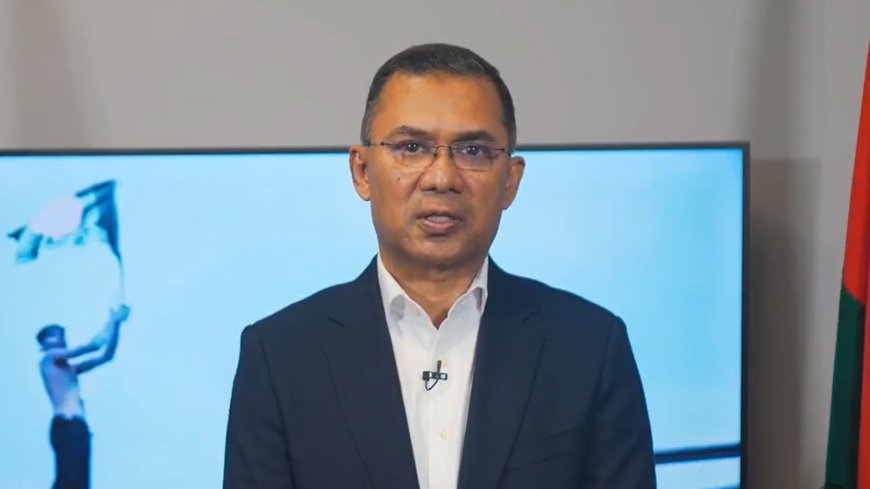
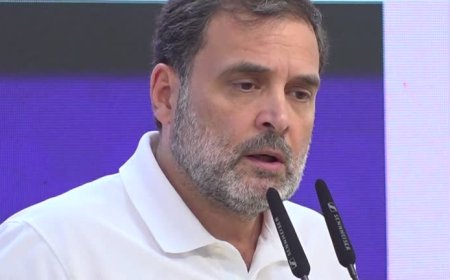
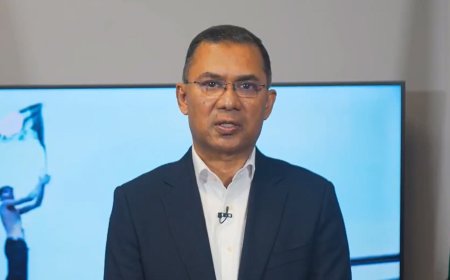
Dhaka — In a dramatic shift in Bangladesh's political landscape, Tarique Rahman, chairman of the Bangladesh Nationalist Party (BNP), is on the verge of assuming office as Prime Minister after his party secured a decisive victory in the February 2026 general elections, crossing the crucial majority threshold. This momentous development marks one of the most significant political transformations Bangladesh has witnessed in nearly four decades.
A Return from Exile: Breaking New Ground
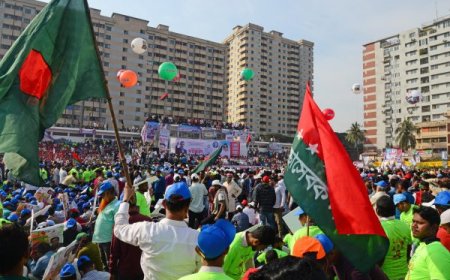
Rahman, aged 60, returned to Bangladesh in December 2025 after spending nearly 17 years in exile in London. His homecoming following such a prolonged absence represents far more than a personal triumph; it signals a fundamental realignment of Bangladesh's political sphere. Following the ouster of Sheikh Hasina's government in 2024 and subsequent court decisions overturning his convictions, Rahman's return to Dhaka was greeted by massive crowds and renewed political energy in the country.
The timing of his return proved decisive. After completing voter registration, Rahman was able to contest the 2026 polls, eventually emerging victorious. What appeared impossible just months earlier has now become reality, demonstrating the electorate's hunger for political change and fresh governance.
A Political Dynasty Revisited
Rahman is the son of former Presidents and Prime Ministers Ziaur Rahman and Khaleda Zia, two towering figures in the nation's post-independence political arena. Khaleda Zia served as Prime Minister from 1991–1996 and 2001–2006, and her death in late 2025 paved the way for her son's political ascendancy.
However, this is not merely a hereditary ascension. Educated in Bangladesh and abroad, Rahman has risen through party ranks as a strategist and organiser, becoming the BNP's de facto leader even during periods when his movements were restricted. His rise reflects both his political acumen and the electorate's confidence in his vision for the nation.
A Platform Built on Change and Reform
Rahman's electoral campaign resonated with millions of Bangladeshis weary of corruption and stagnation. He campaigned on a platform of change and national renewal, with key themes including anti-corruption and clean governance. He has promised to tackle entrenched corruption and restore accountability in public institutions.
The economic dimension of his agenda is equally compelling. Rahman has vowed to invigorate Bangladesh's economy with job creation, foreign investment and support for farmers and families, positioning his agenda as inclusive and forward-looking with an aim to balance tradition with reform and appeal to both older party loyalists and younger voters.
Beyond economics, the BNP's manifesto unveiled in February 2026 outlined 51 key points divided into nine commitments, including provisions for employment and youth skill development, educational reform, expansion of power generation capacity up to 35,000 MW by 2030, and the creation of a trillion-dollar economy by 2034. These ambitious targets demonstrate an administration planning for transformative growth.
Regional Implications: Navigating Complex Geopolitics
Perhaps the most consequential aspect of Rahman's ascension concerns Bangladesh's foreign policy orientation, particularly its relationship with India. Experts believe regional geopolitics will be a central test for Rahman's leadership, as relations with India have been strained recently, particularly during the Hasina years and amid rising regional strategic competition.
However, Rahman's government is signaling a pragmatic approach. The party manifesto calls for relations with neighbours based on equality, fairness and mutual interest, including addressing border issues, water sharing and cooperation on trade and security. Analysts expect Rahman to pursue a balanced foreign policy, strengthening ties with both India and other partners while asserting Bangladesh's national interests.
Since the ouster of Sheikh Hasina's government in 2024, Bangladesh-Pakistan ties have seen a thaw, with high-level visits resuming after decades, including the resumption of cargo shipping services and direct flights. A new prime minister from the BNP, with historical ties to Pakistan, could potentially accelerate this warming of relations. This recalibration of Bangladesh's regional engagement could reshape South Asian dynamics in profound ways.
A Mandate for Renewal
With nearly 127 million eligible voters, Bangladesh held its 2026 parliamentary elections on February 12, marking the first national vote since the dramatic August 2024 collapse of Sheikh Hasina's government. The strong mandate Rahman and his coalition received represents a clear directive from the people for substantive change.
The victory also reflects the electorate's rejection of the status quo. After years of authoritarian governance, economic hardship, and institutional decay, Bangladeshis chose to entrust their future to a leader promising fundamental reform. This is no ordinary political transition—it is a watershed moment for the nation.
Looking Forward: The Promise and Challenge Ahead
As Tarique Rahman prepares to assume office, the expectations on his shoulders are immense. He must deliver on promises of fighting corruption, revitalizing the economy, and providing transparent, accountable governance. Simultaneously, he must navigate Bangladesh's complex geopolitical terrain while managing relationships with neighboring powers and international partners.
The success or failure of Rahman's tenure will likely determine Bangladesh's trajectory for years to come. Will his government fulfill its reformist agenda? Can it bridge Bangladesh's deep political divisions? How will it reshape the nation's regional relationships?
These questions will define not just Rahman's legacy, but the future direction of a nation of over 170 million people. The 2026 election has handed him the mandate. Now comes the far more challenging task of delivery.
What's Your Reaction?
 Like
0
Like
0
 Dislike
0
Dislike
0
 Love
0
Love
0
 Funny
0
Funny
0
 Angry
0
Angry
0
 Sad
0
Sad
0
 Wow
0
Wow
0