









Supreme Court Deliberates on Diwali Firecracker Ban in Delhi-NCR
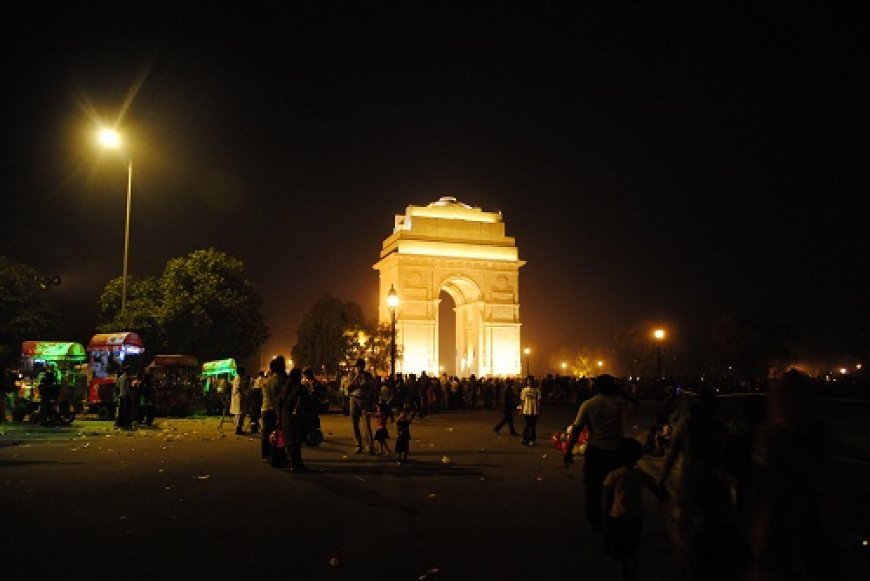
As the Festival of Lights approaches, millions across Delhi and the National Capital Region await a crucial decision from the Supreme Court that could determine whether the sound of firecrackers will accompany their Diwali celebrations this year. The apex court has reserved its judgment on a contentious issue that sits at the intersection of cultural tradition, environmental concerns, and public health.
The Current Dilemma
The Supreme Court finds itself navigating a complex challenge: how to honor India's festive traditions while addressing the severe air pollution crisis that grips Delhi-NCR every winter. Earlier this year, in April, the court had taken a stringent stance by imposing a comprehensive year-long ban on all types of firecrackers in the region, including the so-called "green crackers" that were previously permitted. This absolute prohibition marked a significant departure from earlier, more nuanced approaches to the problem.
However, the blanket ban sparked considerable debate and led to multiple petitions seeking its recall. Manufacturers, traders, and citizens alike questioned whether such a complete restriction was necessary or whether a more balanced approach could achieve environmental goals without entirely eliminating a cherished aspect of festival celebrations.
A Potential Shift in Approach
During a hearing on October 10, 2025, the Chief Justice of India BR Gavai hinted at a possible relaxation of the ban, specifically for the Diwali period. This verbal indication has raised hopes among those who believe that festivals can be celebrated responsibly without causing disproportionate environmental damage. The court is now considering whether to permit green crackers—those certified by the National Environmental Engineering Research Institute—for limited use during the festival.
The government's position, presented by Solicitor General Tushar Mehta, reflects an attempt to find middle ground. The proposal seeks to balance environmental protection with cultural celebration, suggesting that children and families should be allowed to experience the joy of festival traditions, albeit with strict controls and time limitations.
The Proposed Framework
If the Supreme Court decides to lift the ban, the framework being considered is comprehensive and detail-oriented. The proposal centers on allowing only scientifically approved green crackers developed by NEERI, which produce significantly less pollution than traditional firecrackers. These would be available exclusively through licensed vendors, with a complete prohibition on online sales through major e-commerce platforms to ensure better monitoring and control.
The timing restrictions proposed are quite specific: an eight-to-ten evening window on Diwali, acknowledging both the traditional timing of celebrations and the need to limit prolonged exposure to pollution. The government has also recognized regional variations in Diwali celebrations, such as the morning festivities of Narak Chaturdashi in some communities, suggesting that any final order would need to accommodate these diverse practices.
Quality control measures form a critical component of the proposal. Manufacturers would be required to create QR codes for their products and submit them to regulatory authorities. Regular testing would be conducted to check for banned chemicals like barium, arsenic, lead, and mercury. The penalties for violations would be severe, including license suspensions and immediate seizure of manufacturing facilities.
The Broader Context
The issue extends beyond Diwali alone. The government's submission includes requests for similar permissions during other festivals such as Christmas, New Year's Eve, and Gurpurab, recognizing that firecracker use is not exclusive to any single community or celebration. This inclusive approach acknowledges that if restrictions are to be modified, they should apply equitably across different festivals and communities.
One significant concern raised during the proceedings involves counterfeit products. The amicus curiae pointed to the proliferation of fake green crackers that are simply traditional crackers repackaged and mislabeled. This deception not only undermines environmental objectives but also erodes public trust in the green cracker concept itself. The court has suggested that random sampling and testing by police and regulatory authorities could help identify and prosecute violators.
Economic and Social Dimensions
Beyond the environmental debate lies a human dimension often overlooked in discussions about bans. The firecracker industry employs thousands of people, many from marginalized communities who depend on seasonal manufacturing and sales for their livelihoods. Justice K Vinod Chandran acknowledged this reality, noting that the industry's suffering impacts these vulnerable sections most severely. A complete ban, while potentially beneficial for air quality, creates economic hardship for these workers and their families.
The court's consideration of revisiting its 2018 judgment in the Arjun Gopal case reflects this awareness. That earlier decision had attempted to chart a middle path by allowing green crackers with specific time and place restrictions, rather than imposing an outright ban. The current deliberation suggests the court is evaluating whether that balanced approach might be more effective than an absolute prohibition.
The Air Quality Question
Central to this entire debate is whether firecracker restrictions actually improve air quality measurably. When asked about improvements in the Air Quality Index since 2018, the Solicitor General's response was sobering: AQI levels have remained largely unchanged, except during the COVID-19 lockdown period when reduced economic activity and traffic led to clearer skies. This raises important questions about whether firecracker restrictions alone can solve Delhi's air pollution crisis, or whether they address only a small part of a much larger problem involving vehicular emissions, industrial pollution, construction dust, and stubble burning.
Looking Ahead
As Delhi-NCR residents await the Supreme Court's final verdict, the broader question remains: how can India honor its rich tapestry of festivals while addressing legitimate environmental and health concerns? The answer likely lies not in absolute prohibitions or unrestricted freedom, but in finding intelligent compromises that respect both tradition and the urgent need for cleaner air.
The reserved judgment represents more than just a legal decision about firecrackers. It symbolizes the ongoing challenge of balancing development with sustainability, tradition with modernity, and individual freedom with collective welfare. Whatever the court decides, the conversation around how India celebrates its festivals is clearly evolving, reflecting a society grappling with the complexities of contemporary life while seeking to preserve the essence of its cultural heritage.
For now, as Diwali approaches, millions wait to learn whether the night sky will light up with more than just diyas and decorative lights, or whether this year's celebrations will be marked by a different kind of illumination—one that prioritizes the air we breathe over the sounds and sights that have traditionally accompanied the Festival of Lights.
What's Your Reaction?
 Like
0
Like
0
 Dislike
0
Dislike
0
 Love
0
Love
0
 Funny
0
Funny
0
 Angry
0
Angry
0
 Sad
0
Sad
0
 Wow
0
Wow
0