











Vande Mataram at 150: A National Song's Journey Through History and Politics


A Song Born in Revolutionary Fervor
One hundred fifty years ago, in November 1875, Bengali novelist Bankim Chandra Chatterjee penned words that would eventually become the battle cry of a nation fighting for its freedom. Vande Mataram—"I bow to thee, Mother"—emerged not just as poetry, but as a revolutionary invocation that stirred millions during India's independence struggle.
The song's power lay in its vivid imagery and emotional resonance. It painted the motherland as a divine entity worthy of devotion, sacrifice, and love. Freedom fighters sang it in protest marches, whispered it in prison cells, and carried it as a banner of defiance against colonial rule. By the time India gained independence in 1947, Vande Mataram had become inseparable from the story of the nation's birth.
Yet, as with many symbols born in the heat of revolution, the transition from resistance anthem to national treasure proved more complex than anticipated.
The 1937 Decision That Echoes Today
The heart of today's parliamentary debate centers on a decision made nearly nine decades ago. In 1937, the Indian National Congress Working Committee, led by figures including Jawaharlal Nehru, decided that only the first two stanzas of Vande Mataram would be sung at official functions. The remaining verses, which included references to Hindu deities and imagery of the goddess Durga, were effectively set aside.
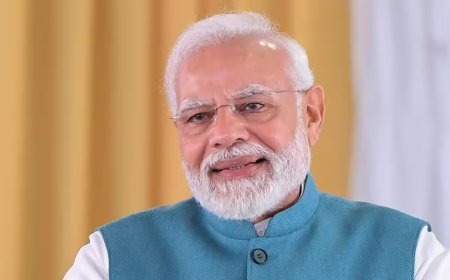
Prime Minister Narendra Modi has characterized this decision as a fracture—a deliberate breaking apart of the song that he links to broader patterns of political appeasement. His government argues that the 1937 choice represented a capitulation to communal pressures at a critical juncture in India's history, mere years before partition would tear the subcontinent apart.
The Congress party, meanwhile, maintains that the decision reflected a commitment to pluralism and national unity. Their position emphasizes that limiting the official version to two stanzas was an inclusive gesture, one that allowed citizens of all faiths to embrace the national song without theological conflict. Historical records indicate that even Rabindranath Tagore, India's towering literary figure, supported finding common ground that all Indians could stand upon.
When Symbols Become Battlegrounds
What makes today's debate particularly significant is not merely its historical focus, but what it reveals about contemporary India's struggle with its own symbols. The ten-hour parliamentary discussion—featuring speeches from the Prime Minister, Defence Minister Rajnath Singh, and opposition leaders including Priyanka Gandhi Vadra and Gaurav Gogoi—represents more than an academic exercise in historical interpretation.
It reflects fundamental questions that nations worldwide grapple with: How do diverse societies honor their founding narratives while ensuring all citizens feel represented? Can a symbol born in one context successfully evolve to serve another? And who gets to decide which version of history becomes the official record?
The timing of this debate, coinciding with year-long celebrations that began in November 2025, ensures maximum public attention. Yet the passion on display in Parliament today suggests that beneath the ceremonial commemoration lies genuine disagreement about India's path forward.
The Paradox of National Songs
There's an inherent tension in designating any artistic work as a national symbol. Art thrives on interpretation, nuance, and the freedom to mean different things to different people. National symbols, by contrast, demand unity and shared meaning. They must serve as rallying points, not points of division.
Vande Mataram embodies this paradox. Its literary merit is undisputed. Its role in galvanizing resistance to colonial rule is historically documented. Yet its very power—its invocation of specific religious imagery and its emotional intensity—makes it difficult to universally embrace in a nation as religiously diverse as India.
The 1950 decision to adopt only the first two verses as India's official national song represented an attempt to resolve this paradox. Whether that compromise succeeded or failed depends largely on one's perspective, as today's debate makes abundantly clear.
Beyond the Political Theater
As parliamentarians exchange accusations and counterarguments, it's worth remembering what lies beyond the political maneuvering. Vande Mataram, regardless of how many verses one sings, remains a piece of India's cultural heritage. It represents a moment when words inspired action, when poetry became protest, when literature shaped history.
The real question isn't whether the 1937 decision was right or wrong by today's standards. History cannot be relitigated with the luxury of hindsight. The more pressing question is what role this 150-year-old song should play in contemporary India—a nation of over 1.4 billion people navigating the challenges of the 21st century while honoring the legacy of its independence struggle.
Perhaps the most fitting tribute to Vande Mataram on its sesquicentennial isn't found in parliamentary debates or political point-scoring, but in recognizing it for what it truly is: a powerful artifact of a specific historical moment, deserving of respect and study, even as we acknowledge the complexity of transplanting revolutionary fervor into the more measured rhythms of democratic governance.
As the debate continues in Parliament today, the nation watches—not just to see who wins the argument, but to understand what these disagreements reveal about India's ongoing conversation with itself about identity, belonging, and the stories we choose to tell about who we are.
What's Your Reaction?
 Like
0
Like
0
 Dislike
0
Dislike
0
 Love
0
Love
0
 Funny
0
Funny
0
 Angry
0
Angry
0
 Sad
0
Sad
0
 Wow
0
Wow
0