
















Karnataka Congress: When Power-Sharing Promises Collide with Political Ambition

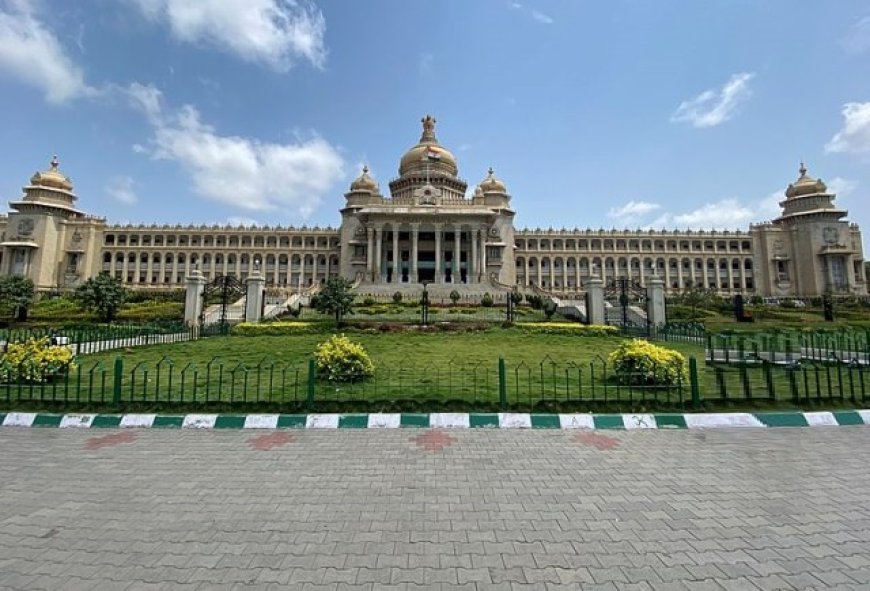
The corridors of power in Karnataka are buzzing with tension as an alleged two-and-a-half-year rotation agreement threatens to unravel the fragile coalition that has held the Congress government together since 2023. What was once a behind-the-scenes deal now plays out in the harsh glare of Delhi's political theater, with loyalists shuttling between state capitals and the party high command desperately seeking damage control.
The Promise That Won't Die
In 2023, when the Congress swept back to power in Karnataka after 15 years in the wilderness, whispers of a "rotation formula" began circulating. The narrative was simple: Siddaramaiah would lead as Chief Minister for roughly two and a half years, after which the reins would pass to his deputy, DK Shivakumar. It was the kind of gentlemen's agreement that lubricates coalition politics—explicit enough to keep ambitious partners happy, vague enough to provide plausible deniability later.
Today, as Siddaramaiah approaches the mythical 30-month mark, that agreement has transformed from a private understanding into a public battleground.
The Delhi Pressure Campaign
What's most revealing about this drama isn't the disagreement itself, but how it's playing out. Rather than settling matters in Bengaluru backrooms, Shivakumar's camp has orchestrated a determined pilgrimage to Delhi. Batch after batch of his supporting MLAs have trekked to the national capital, camping outside Congress headquarters to make their case to the high command. It's a move that speaks volumes: when the state can't settle the score, appeal to the center.
This strategy isn't subtle. It sends a clear message that Shivakumar's loyalists are willing to create pressure, and potentially, instability. The Congress high command finds itself in an uncomfortable position—caught between honouring a promise that could destabilize the Karnataka government and breaking faith with a deputy chief minister who has mobilized his support base for a confrontation.
A Chief Minister's Defiance
Siddaramaiah, for his part, has been unambiguous. He will complete the full term. He will present the budget. He will not be moved by murmurs of rotation or succession. His stance is rooted in both principle and pragmatism: he is a Dalit chief minister in a state where caste politics remains central to electoral calculations. Any premature departure could be framed as a humiliation, potentially damaging the Congress's Dalit outreach in elections to come.
Shivakumar, despite his considerable influence and the affection he commands in party circles, faces an inconvenient truth: he is an OBC leader seeking to displace a Dalit CM. In Congress politics, where social justice narratives run deep, this positioning is precarious.
The Complication No One Expected
Here's where the plot thickens. Within Congress circles, Dalit leaders have begun quiet conversations of their own. If Siddaramaiah were forced out, they argue, his replacement should be another Dalit leader—not an OBC face. The reasoning is political arithmetic: with elections in Bihar looming, the Congress needs to demonstrate its commitment to Dalit leadership. Replacing a Dalit CM with an OBC deputy sends entirely the wrong signal.
This three-way tug-of-war—Siddaramaiah refusing to budge, Shivakumar demanding his due, and Dalit Congress leaders drawing red lines—has transformed what could have been a surgical power transition into a potential minefield.
The High Command's Dilemma
Congress President Mallikarjun Kharge has called for a summit in Delhi on November 29, where both Siddaramaiah and Shivakumar will present their cases before Rahul Gandhi and the party brass. On paper, this is a forum for principled negotiation. In reality, it's a powder keg waiting to ignite.
The Congress has to thread an impossible needle. Honour the 2023 agreement and risk appearing weak and unstable. Break the agreement and alienate Shivakumar's support base, potentially triggering defections. Propose a face-saving compromise and satisfy no one.
What This Reveals About Congress Politics
This drama illuminates broader vulnerabilities within the Congress party. First, the reliance on unwritten agreements and backdoor deals leaves room for explosive disputes when circumstances change. Second, the party's tendency to defer difficult decisions to Delhi's high command has created a culture where ambitious state leaders must lobby the center rather than resolve matters locally. Third, the factional nature of Congress politics means every leadership transition becomes a test of relative strength rather than an orderly succession.
For a party already weakened by internal fissures and electoral defeats, this public squabbling sends a damaging message to voters: the Congress cannot even manage its own government, let alone the state's affairs.
The Waiting Game
As November 29 approaches, all eyes will be on that Delhi meeting. Will Siddaramaiah emerge unshaken? Will Shivakumar get his moment? Will the Congress high command find a creative solution that preserves both the party's stability and its moral authority?
Or will this become another chapter in the long saga of the Congress's organizational decline—a moment when internal politics trumped governance, and ambitious leaders forgot that parties thrive on unity, not constant power struggles.
One thing is certain: in Karnataka's Congress, the real election isn't happening in voting booths. It's happening in Delhi's corridors, and the stakes couldn't be higher.
What's Your Reaction?
 Like
0
Like
0
 Dislike
0
Dislike
0
 Love
0
Love
0
 Funny
0
Funny
0
 Angry
0
Angry
0
 Sad
0
Sad
0
 Wow
0
Wow
0