





Putin's Delhi Visit: India Walks the Tightrope Between East and West
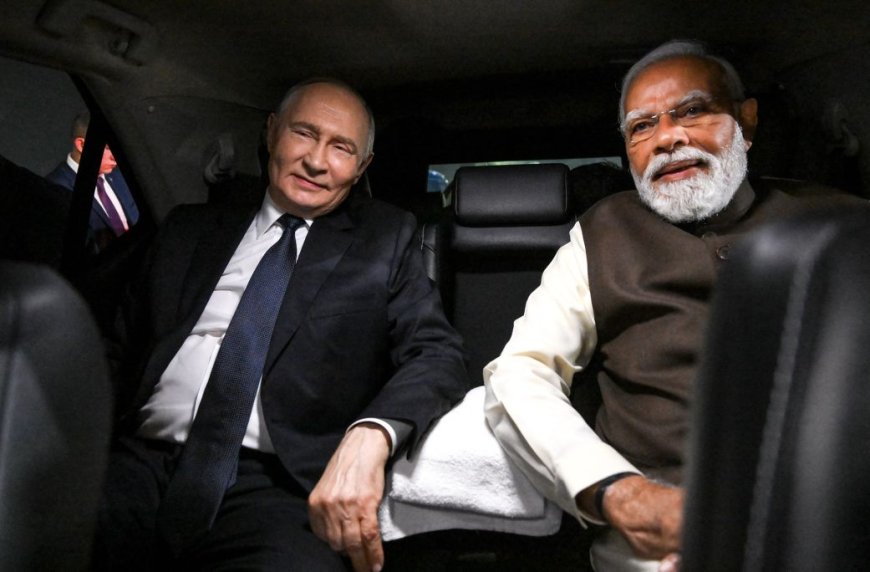
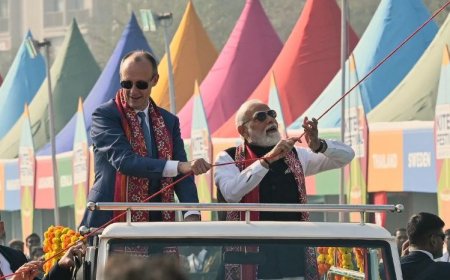
When Russian President Vladimir Putin stepped off his plane in New Delhi on December 4th, he was greeted by an unusual sight: Prime Minister Narendra Modi waiting personally at the airport, a deviation from typical diplomatic protocol reserved for only the most significant of occasions. This warm reception set the tone for a visit that would underscore one of the most delicate balancing acts in contemporary geopolitics.
A Partnership Under Pressure
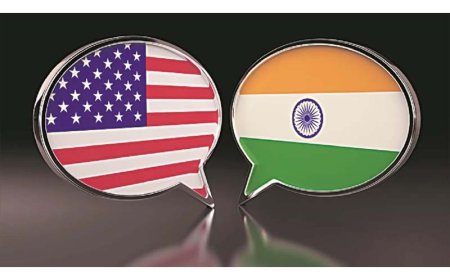
Putin's two-day visit marked his first trip to India since the full-scale invasion of Ukraine nearly three years ago. The 23rd India-Russia Annual Summit came at a moment when New Delhi finds itself caught between competing pressures from Moscow and Washington, forced to navigate an increasingly polarized global landscape while protecting its own strategic interests.
The timing was particularly significant. Just weeks earlier, the incoming Trump administration had imposed heavy tariffs on Indian goods, citing among other reasons India's continued imports of Russian oil. Yet here was Putin, arriving with a delegation that included not just his defense minister but also the heads of Russia's major oil companies—Rosneft and Gazprom Neft—both currently under Western sanctions.
The Economics of Strategic Autonomy
The centerpiece of discussions focused on an ambitious target: expanding bilateral trade to $100 billion by 2030, up from $68 billion recorded in 2024. This represents more than just economic cooperation—it's a statement of intent from India that it will not allow external pressure to dictate its partnerships.
Energy emerged as a critical pillar of this relationship. Despite American warnings and tariff threats, Putin pledged uninterrupted fuel supplies to India. For New Delhi, this isn't merely about economics; Russian oil has provided India with energy security at competitive prices during a period of global volatility. Walking away from this relationship would mean higher energy costs and increased dependence on Middle Eastern suppliers.
Defense and Currency: The Deeper Ties
Beyond energy, the talks delved into sensitive areas of defense cooperation. The supply of Russia's advanced S-400 missile defense system remained on the agenda, along with discussions about rail manufacturing and other strategic sectors. The presence of Russia's state arms exporter Rosoboronexport in Putin's delegation underscored the military dimension of this partnership—a relationship built over decades when Western nations were reluctant to supply India with advanced weaponry.
Perhaps most intriguing was the focus on settling trade in national currencies rather than dollars. This push to bypass the dollar-dominated global financial system represents both countries' desire to insulate their economic relationship from Western sanctions and financial leverage.
The Optics of Defiance
Modi's decision to personally receive Putin at the airport and host him for a private dinner at his residence sent a clear message to both Washington and the international community: India refuses to be boxed into choosing sides in the new Cold War dynamics emerging between Russia and the West.
This stance reflects India's long-standing policy of strategic autonomy—the belief that as a rising power, India should maintain the flexibility to engage with all major players on terms that serve Indian interests. It's a position that has frustrated Western diplomats hoping India would align more closely against Russia, but one that resonates deeply within India's foreign policy establishment.
The High-Wire Act
India's challenge is formidable. On one hand, it needs to maintain strong ties with the United States, its crucial partner in countering China's growing influence in the Indo-Pacific. The Quad alliance with the US, Japan, and Australia remains central to India's regional security strategy. On the other hand, Russia supplies the majority of India's military equipment, and any rupture would leave India's defense capabilities vulnerable at a time when it faces border tensions with China.
The visit highlighted this delicate equilibrium. While embracing Putin publicly, India has also quietly urged Russia to find a diplomatic solution to the Ukraine conflict. Modi himself reminded Putin during a previous meeting that "this is not an era of war," a statement that received international attention.
Looking Forward
As Putin departed Delhi, the visit left several questions unanswered. Can India truly maintain this balanced approach as global divisions deepen? Will American pressure escalate, forcing harder choices? And how long can New Delhi sustain relationships with powers that view each other as adversaries?
What's clear is that India sees itself not as a middle power forced to choose sides, but as an emerging great power with the leverage to chart its own course. The warmth of Putin's reception in Delhi was India's way of asserting that prerogative—a declaration that in the 21st century's multipolar world, New Delhi intends to be a pole unto itself, not a satellite in someone else's orbit.
Whether this strategy proves sustainable in an increasingly divided world remains one of the most compelling questions in contemporary international relations. For now, India is betting that it can have its cake and eat it too—maintaining crucial ties with Russia while deepening partnerships with the West. Putin's visit showed that, at least for the moment, Delhi believes that bet is worth making.
What's Your Reaction?
 Like
0
Like
0
 Dislike
0
Dislike
0
 Love
0
Love
0
 Funny
0
Funny
0
 Angry
0
Angry
0
 Sad
0
Sad
0
 Wow
0
Wow
0