
















The Constitutional Architect: C.P. Radhakrishnan's Multi-Dimensional Leadership Journey

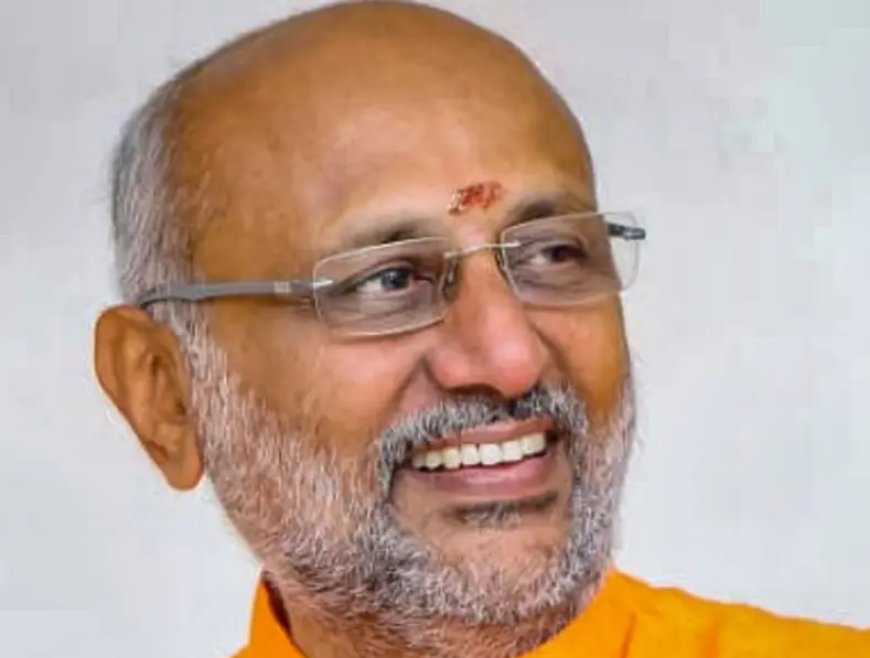
The Constitutional Architect: C.P. Radhakrishnan's Multi-Dimensional Leadership Journey
A Deep Dive into the Making of India's Potential Vice President
In the pantheon of Indian political leadership, few figures embody the intersection of ideological commitment and constitutional governance as comprehensively as Chandrapuram Ponnusamy Radhakrishnan. His nomination as the National Democratic Alliance's Vice Presidential candidate represents more than a political appointment—it symbolizes the evolution of a leader who has mastered the delicate balance between partisan politics and constitutional propriety.
The Tiruppur Genesis: Roots of a Constitutional Mind
The industrial town of Tiruppur, known for its textile prowess, produced in 1957 a future constitutional office-bearer whose career would mirror the town's own transformation from a small settlement to a global textile hub. Radhakrishnan's early exposure to the organizational discipline of the Rashtriya Swayamsevak Sangh instilled in him a systematic approach to institution-building that would later become his political signature.
Unlike many contemporary politicians who entered public life through family connections or sudden opportunities, Radhakrishnan's trajectory was methodical—a testament to his belief in earned leadership rather than inherited privilege. His formative years in the RSS provided him with what political scientists term "organizational DNA"—an innate understanding of how institutions function, evolve, and sustain themselves across changing circumstances.
The Parliamentary Laboratory: Coimbatore's Gift to National Politics
Radhakrishnan's consecutive electoral victories from Coimbatore in 1998 and 1999 revealed a politician who understood the fundamental principle of democratic representation: the ability to translate local aspirations into national policy frameworks. His parliamentary tenure coincided with India's economic liberalization phase, providing him with ringside access to the transformation of India's political economy.
During these crucial years, he witnessed firsthand how global economic forces interact with local political realities—an experience that would prove invaluable in his later gubernatorial roles. His parliamentary interventions, while rooted in his constituency's textile industry concerns, demonstrated an understanding of broader economic policy implications that distinguished him from purely regional leaders.
The Organizational Alchemist: Transforming BJP's Tamil Nadu Footprint
Perhaps nowhere is Radhakrishnan's political acumen more evident than in his tenure as Tamil Nadu BJP president. Taking charge of a party with limited regional roots in a state dominated by Dravidian politics required not just political courage but strategic innovation. His approach involved what contemporary political analysts describe as "cultural translation"—adapting national political narratives to resonate with Tamil Nadu's unique linguistic and cultural identity.
He recognized that the BJP's growth in Tamil Nadu required more than ideological commitment; it demanded cultural sensitivity and local leadership development. Under his stewardship, the party began developing what could be termed a "Tamil Nadu model" of Hindu nationalism—one that respected regional sensitivities while maintaining ideological coherence with the national party.
The Constitutional Practitioner: Lessons from Multiple Raj Bhavans
Radhakrishnan's gubernatorial appointments across multiple states—Jharkhand, Telangana, Puducherry, and currently Maharashtra—represent a unique experiment in Indian constitutional practice. Few leaders have had the opportunity to observe and influence governance patterns across such diverse political and cultural landscapes within a short timeframe.
His experience managing additional charges of multiple gubernatorial positions simultaneously provided him with insights into the operational challenges of Indian federalism. This multi-state experience offers him a perspective on center-state relations that few constitutional office-bearers possess—a critical asset for someone aspiring to the Vice Presidency, which serves as the bridge between the executive and legislative branches of government.
The Administrative Synthesizer: Lessons from India's Industrial Powerhouse
As Maharashtra's Governor, Radhakrishnan oversees a state that contributes nearly 15% of India's GDP and houses the country's financial capital. This role has exposed him to the complexities of governing India's most economically dynamic state, where policy decisions have national and international ramifications.
His Maharashtra tenure has been marked by his ability to maintain constitutional neutrality while facilitating effective governance—a skill that will be crucial if he assumes the Vice Presidency. The state's diverse political landscape, from Mumbai's cosmopolitan culture to rural Maharashtra's agrarian concerns, has provided him with a microcosm of India's broader challenges and opportunities.
The Strategic Nomination: Reading the Political Tea Leaves
The NDA's choice of Radhakrishnan reflects a sophisticated understanding of contemporary Indian politics. His nomination addresses multiple strategic imperatives simultaneously: strengthening the alliance's southern connect, appealing to OBC communities, and presenting a candidate with impeccable constitutional credentials.
Political observers note that his selection represents what they term "competence-based politics"—choosing leaders based on demonstrated capability rather than pure electoral calculations. His four-decade political journey, spanning grassroots organizing to constitutional office, provides the NDA with a candidate who embodies both ideological commitment and institutional experience.
The Federalism Expert: Understanding India's Complex Polity
Radhakrishnan's unique experience across different states has made him an inadvertent expert on Indian federalism. His observations of how the same constitutional framework operates differently across various political cultures provide him with insights that could prove valuable in the Vice President's role as Chairman of the Rajya Sabha.
The Rajya Sabha, representing India's states in the federal structure, requires a presiding officer who understands regional sensitivities while maintaining national perspective—qualities that Radhakrishnan's multi-state experience has honed to perfection.
The Bridge Builder: Connecting Ideology with Pragmatism
Perhaps Radhakrishnan's greatest political asset is his ability to function as a bridge between ideological commitment and pragmatic governance. His RSS background provides him with ideological moorings, while his constitutional roles have taught him the importance of institutional neutrality—a combination that Indian democracy increasingly values.
This synthesis of conviction and compromise makes him particularly suited for the Vice Presidency, an office that requires both partisan understanding and constitutional propriety. His career demonstrates that effective leadership in India's complex democracy requires not choosing between ideology and pragmatism, but finding ways to make them complementary.
The September Crucible: A Nation's Constitutional Moment
As India prepares for the September 9 Vice Presidential election, Radhakrishnan's candidacy represents more than a political contest—it's a referendum on the type of leadership the country values. His nomination suggests that Indian voters increasingly appreciate leaders who have demonstrated competence across multiple roles rather than those who have excelled in single dimensions.
The election will test whether his unique combination of grassroots experience, parliamentary knowledge, organizational skills, and constitutional practice resonates with the electoral college comprising parliamentarians and state legislators.
The Constitutional Future: Implications of His Potential Victory
Should Radhakrishnan succeed in his Vice Presidential bid, he would bring to the office a unique perspective shaped by his multi-faceted career. His experience across different states and constitutional positions would make him one of the most comprehensively prepared Vice Presidents in India's history.
His potential tenure could redefine the Vice Presidency from a largely ceremonial role to a more substantive position that actively contributes to India's governance framework. His understanding of both politics and administration could help strengthen the often underutilized bridge between the government and Parliament that the Vice President represents.
Legacy in the Making: The Radhakrishnan Model
Whether or not he wins the Vice Presidential election, Radhakrishnan has already established a template for political leadership in contemporary India. His career demonstrates that sustainable political success requires more than electoral victories—it demands institutional contribution and constitutional commitment.
His journey from a young RSS volunteer to a potential Vice President illustrates the continuing vitality of India's democratic system, where merit and persistence can still triumph over privilege and circumstance. In an era often characterized by political polarization, his ability to maintain ideological commitment while respecting constitutional norms offers a path forward for Indian democracy.
The story of C.P. Radhakrishnan is ultimately the story of Indian democracy itself—complex, challenging, but ultimately rewarding for those who approach it with dedication, intelligence, and institutional respect. As the nation prepares to choose its next Vice President, it's not just selecting an individual but endorsing a vision of leadership that values competence, experience, and constitutional wisdom above all else.
What's Your Reaction?
 Like
0
Like
0
 Dislike
0
Dislike
0
 Love
0
Love
0
 Funny
0
Funny
0
 Angry
0
Angry
0
 Sad
0
Sad
0
 Wow
0
Wow
0