

























Australia's Race Toward Asia: When Continents Collide

The world's fastest-moving continent is already disrupting GPS systems and heading for a geological showdown that will reshape our planet
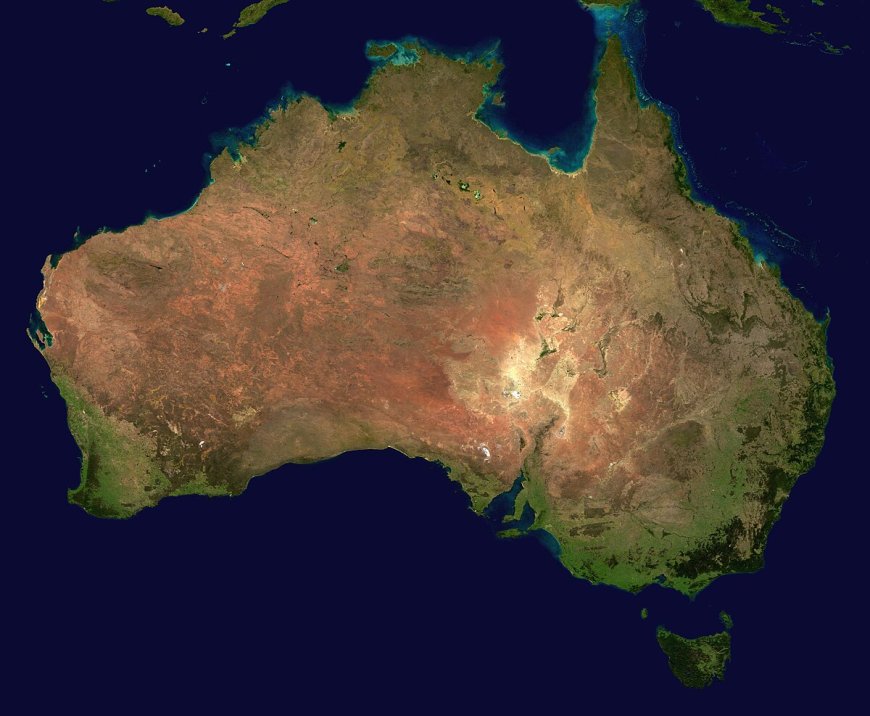
Beneath Australia's familiar landscapes, powerful forces are at work. The continent is racing northward at 7 centimeters per year—making it the fastest-moving landmass on Earth—on an inevitable collision course with Asia that will fundamentally transform both continents.
A Continental Speed Demon
While 7 centimeters annually might seem imperceptible, it's lightning-fast in geological terms. Australia is moving toward Southeast Asia at 2.8 inches per year, driven by massive convection currents deep in the Earth's mantle. This relentless drift is already causing real-world problems: GPS systems require constant recalibration, and seismic activity is increasing across the region.
"It's extraordinary to witness continental drift happening at a speed we can actually measure and feel the effects of," explains one geologist studying the phenomenon.
The Collision Has Already Begun
This isn't just a future event. The leading edge of the Australian continent began colliding with the Southeast Asian margin in East Indonesia during the Early Miocene, marking the beginning of what scientists predict will be a complete continental merger in 50 million years.
The process is creating a complex geological puzzle. Recent evidence suggests the Indo-Australian plate may be fracturing, meaning different parts of Australia could experience varying rates of movement and geological stress—imagine a continent slowly tearing itself apart while simultaneously crashing into another.
An Ecosystem Under Siege
Perhaps the most dramatic consequence involves Australia's unique wildlife. Species like kangaroos, wombats, and the bizarre platypus—evolved in isolation for millions of years—face unprecedented challenges as their continent merges with Asia. The collision threatens to trigger a massive extinction event, fundamentally altering Australia's distinctive biological heritage.
Scientists warn the impending collision will unleash significant seismic activity, including intense earthquakes and volcanic eruptions, creating new mountain ranges similar to how the Himalayas formed when India slammed into Asia.
Witnessing Geological History
Australia's rapid movement offers scientists a rare opportunity to study continental collision in real-time—at least in geological terms. The continent's journey from tropical waters, which created the Great Barrier Reef, to its current trajectory toward Asia, represents one of the most significant ongoing geological events on our planet.
As Australia continues its inexorable march north, we're witnessing the early stages of a geographical transformation that will literally redraw the world map. The technological disruptions we're experiencing today—from GPS glitches to increased earthquakes—are merely the opening act of a geological drama that will unfold over tens of millions of years.
In the grand theater of plate tectonics, Australia isn't just moving toward Asia—it's racing there, faster than any other continent on Earth.
What's Your Reaction?
 Like
0
Like
0
 Dislike
0
Dislike
0
 Love
0
Love
0
 Funny
0
Funny
0
 Angry
0
Angry
0
 Sad
0
Sad
0
 Wow
0
Wow
0